【2/22-2/28】Exhibition_ゾエティカ・エブ/Zoetica Ebb×ケンジ・シラトリ/Kenji Siratori_ 『Cryptobiosphere』
展示について
Cryptobiosphere は、展示空間を生きて反応する環境へと変容させる、写真とサウンドによるインスタレーション作品です。そこには、イメージ・音・身体の動きが絶えず相互に再編成される、不安定な生態系が立ち現れます。
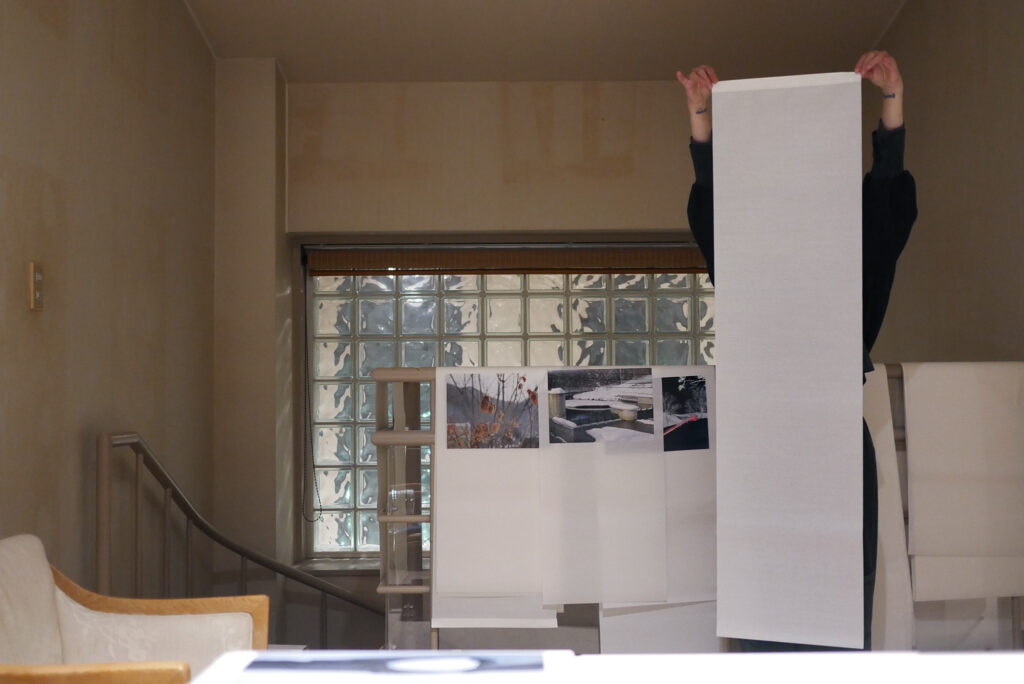
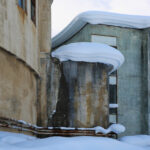
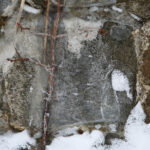
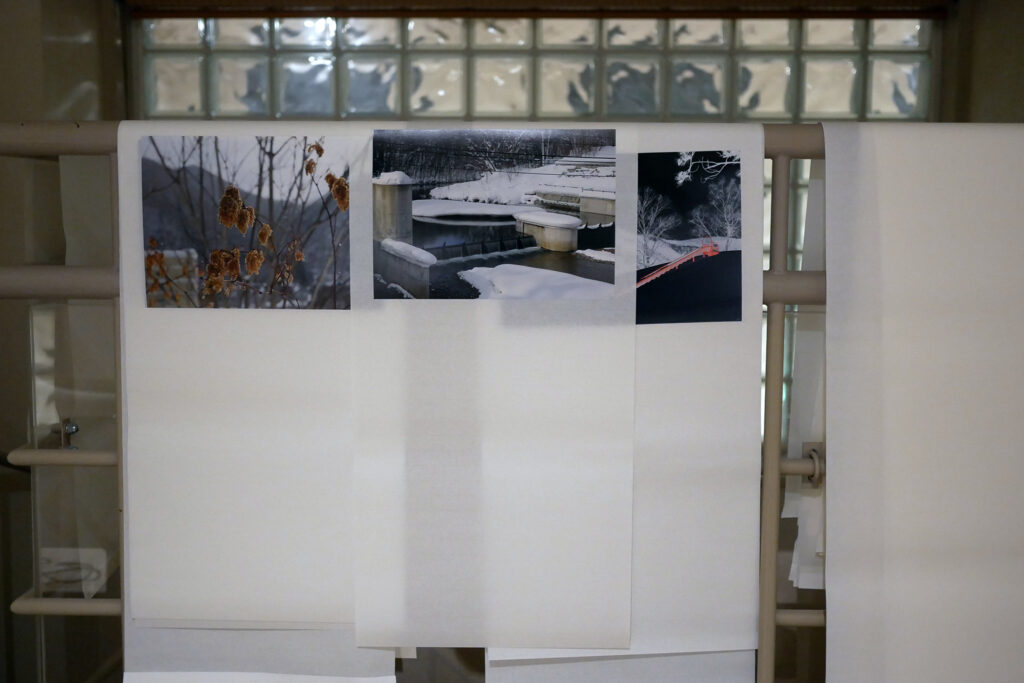
天井から吊るされた写真群は、雪に覆われた密林の中を歩いているかのような感覚を喚起します。イメージは重なり合い、ぼやけ、そして一瞬だけ揃って視界が開けたかと思うと、再び部分的な可視性の中へと溶けていきます。
フィールドレコーディングと加工音から構成されたサウンド環境は、来場者の存在や動きに反応します。このインスタレーションは、あらかじめ定められたシークエンスに従うのではなく、来場者との相互作用の蓄積によって時間とともに変化していきます。
Cryptobiosphere は、静的なアーカイブを提示するのではなく、人間の身体と環境的なシグナルとのあいだに生じる脆さ、儚さ、相互干渉を前景化する知覚システムとして機能します。来場者は外部から作品を鑑賞する存在ではなく、作品を起動させる存在として、一時的に生成し続ける感覚の場の中へと組み込まれていきます。
冬の天神山アートスタジオという環境に位置づけられた Cryptobiosphere は、雪、静寂、圧縮、そして緩やかな変容といったローカルな条件と共鳴しながら、環境がいかにして存在の痕跡を記録し、吸収し、歪めていくのかについての思索を促します。本展は、現在天神山アートスタジオにて制作が進められている、Ebb と Siratori による今後刊行予定の書籍への導入でもあります。
Cryptobiosphere is a photo-sound installation that transforms the exhibition space into a living, responsive environment; an unstable ecology where image, sound, and movement continuously reconfigure one another.
Photographs suspended from above evoke the sensation of walking through a dense, snow-covered forest. Images overlap, blur, and briefly align, producing moments of clarity before dissolving again into partial visibility.
The sound environment, composed from field recordings and processed audio, responds to the presence and movement of visitors. The installation evolves over time, shaped by accumulated interactions rather than a predetermined sequence.
Rather than presenting a static archive, Cryptobiosphere functions as a perceptual system that foregrounds fragility, transience, and mutual interference between human bodies and environmental signals. Visitors do not observe the work from outside; they activate it, becoming temporary agents within an unfolding sensory field.
Situated within Tenjinyama Art Studio’s winter landscape, Cryptobiosphere resonates with local conditions: snow, silence, compression, and slow transformation, inviting reflection on how environments record, absorb, and distort traces of presence. This exhibition is an introduction to Ebb and Siratori’s upcoming book, currently in development at Tenjinyama Art studio.
アーティストについて
ゾエティカ・エブ/Zoetica Ebb
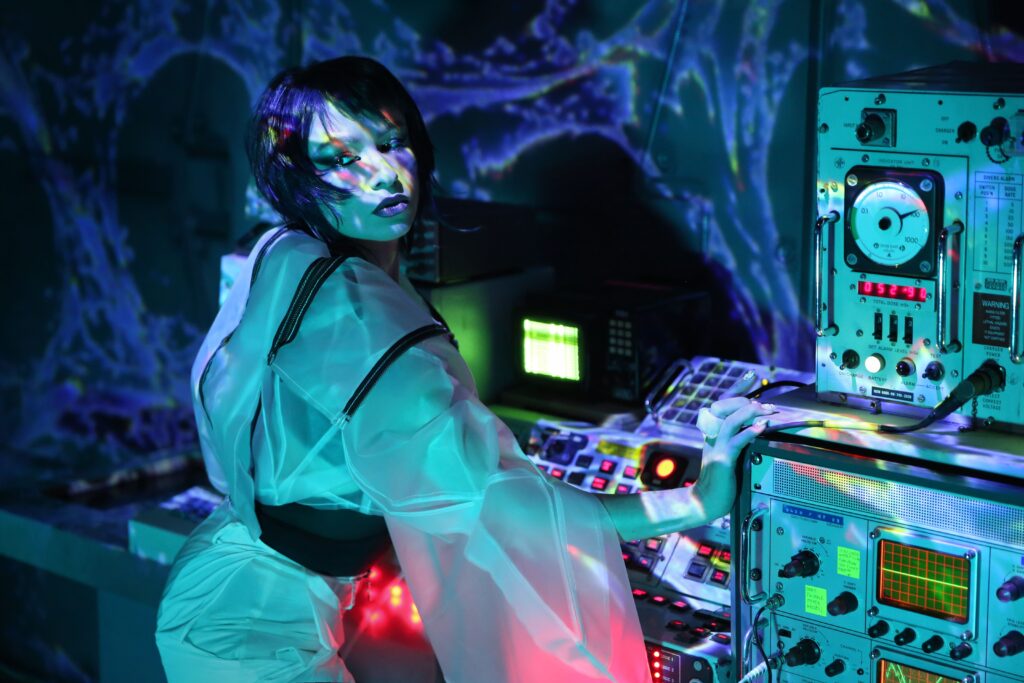
Zoetica Ebb はロンドンを拠点とするマルチメディア・アーティストで、没入型インスタレーション、執筆、実験的リサーチを通じて、思弁的ゼノバイオロジー(異種生物学)、非人間的知覚、そして精神的・配偶的(psychogametous)生命の在り方を探求しています。
Zoetica Ebb is a London-based multimedia artist whose work explores speculative xenobiology, non-human perception, and psychogametous life through immersive installations, writing, and experimental research.
ホームページ(The Institute For Psychogametous Life)
ケンジ・シラトリ/Kenji Siratori
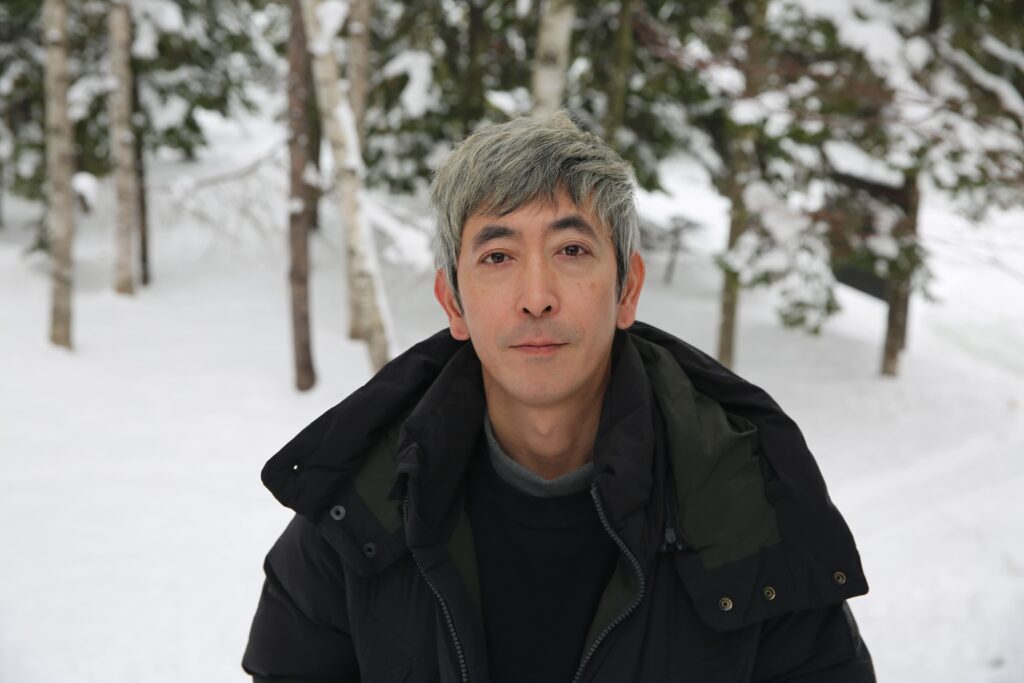
ケンジ・シラトリ は札幌を拠点とする前衛作家・アーティストであり、哲学と実験文学を融合させながら、言語・テクノロジー・意識のあいだにある不安定な境界を探り続けています。
Kenji Siratori is a Sapporo-based avant-garde author and artist whose work fuses philosophy and experimental literature to probe the unstable boundaries between language, technology, and consciousness.
プロジェクトについて
現在進行中のプロジェクト Cryptobiosphere は、写真、テキスト、そしてサイト・レコーディング(現地録音)を組み合わせ、「地球を観測する非人間的存在の視点」から書かれたフィールドジャーナルとして構成されています。本作は天神山アートスタジオで制作され、北海道の冬の風景に大きく影響を受けています。そこでは、過酷な気象条件と、それに抗い、あるいは受け入れながら生きる人々の姿との対比が記録されています。Cryptobiosphere において意味は、直線的な物語によってではなく、解読(デクリプション)のプロセスを通じて徐々に蓄積されていきます。
Cryptobiosphere は2026年秋のリリースを予定しており、さっぽろ文学市(Sapporo Literary Flea Market)での発表が計画されています。
Their current project, Cryptobiosphere, combines photography, text, and site recordings into a field journal written from a non-human perspective observing Earth. Developed at Tenjinyama Art Studio, the work is shaped by the Hokkaido winter landscape, documenting the contrast between austere weather conditions and the ways people both defy and embrace them. In Cryptobiosphere, meaning accumulates through decryption rather than linear narration.
Cryptobiosphere will be released in autumn 2026, with plans to present the work at the Sapporo Literary Flea Market.

これまでの滞在中の活動
過去2か月にわたり、ゾエティカ・エブは北海道各地で写真を撮影してきました。それは、地球を観察する非人間的知性の視点から行われたものであり、雪や氷を一種の知性―感知し、記録し、自己修正する媒体―として捉える試みです。彼女はまた、同じ視座からフィールドノートを書き続けてきました。これらのノートは、人間による解釈ではなく、冬そのものの振る舞いを記録するログを形成しています。
本展では、これらの写真はインスタレーションの一部として統合され、揺れ動く書道用紙に取り付けられます。それにより、雪の森の中を歩いているかのような感覚が生み出されます。紙は中立的な背景ではありません。それは雪と同じように振る舞い、空気の流れに応じて揺れ、接触の痕跡を受け取り、会期を通じて徐々に刻まれ、そして変容していきます。雪が触覚によって形づくられる暫定的な建築であるように、この紙もまた同様です。会期の終わりには、展示開始時と同じ状態ではなくなっているでしょう。
同時に、ケンジ・シラトリは滞在制作期間中にフィールドレコーディングを行い、それらをAIを用いて新たな楽器へと発展させてきました。ギャラリー空間では、これらの楽器が、ゾエティカによるフィールドノート朗読音声と対話しながら、絶えず変化するサウンドスケープを生成します。さらに、天神山スタジオを一日のあいだに行き交う人々の動きをリアルタイムで捉えた音も、その音響テクスチャに組み込まれます。
《クリプトバイオスフィア》は、進行中の研究における初の公開的なエントリーポイントです。同時にそれは、ゾエティカ・エブとケンジ・シラトリが今年後半の刊行を予定している書籍の予告でもあります。その書籍は、写真、フィールドテキスト、そして進化し続ける音響エコロジーを組み合わせたものとなる予定です。
Over the past two months, Zoetica Ebb has been taking photos across Hokkaido from the perspective of a non-human intelligence observing Earth, treating snow and ice as a form of intelligence: a sensing, recording, self-revising medium. She has also been writing field notes from that same vantage point. These notes form a log of winter’s behaviors rather than a human interpretation of them.
In the exhibition, these photographs will be integrated into the installation and mounted on swaying sheets of calligraphy paper to create the sensation of walking through a snowy forest. The paper is not a neutral backdrop, it behaves like snow does, shifting with air currents, taking on traces of contact, and gradually being marked and unmade over the course of the week. Snow is a provisional architecture shaped by touch, and this paper is no different. By the end of the exhibition, it won’t be what it was at the start.
At the same time, Kenji Siratori has been making field recordings throughout the residency and developing them into new musical instruments using AI. In the gallery space, these instruments will generate an ever-changing soundscape in conversation with audio of Zoetica reading her field notes. The sonic texture will also incorporate sounds captured in real time of people moving through Tenjinyama Studio over the course of the day.
Cryptobiosphere is the first public entry point into ongoing research. It is also a preview of a book Zoetica and Kenji Siratori are developing and plan to release later this year, combining photographs, field texts, and an evolving sound ecology.