Back to the Future #3: 明日はもっと果てしない / 明天更漫长
Dedicated to the workers of the Komagaoka Recycling Center.
Some weeks ago, at the Komagaoka Recycling Center, I witnessed a choreography of necessity: a cold, repetitive rhythm, tightly governed time, and a machine-like discipline imposed on the human body. This exhibition is a response to that weight.
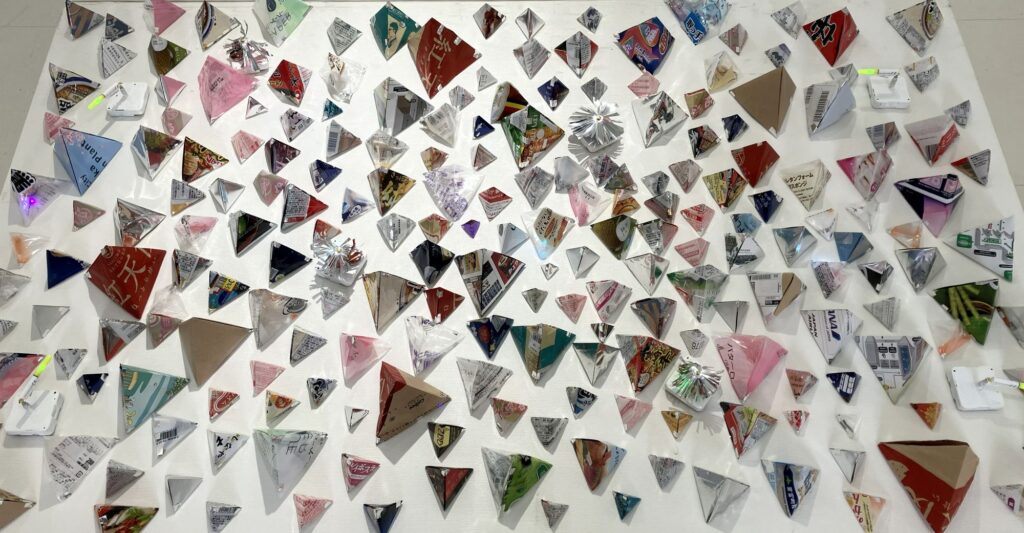
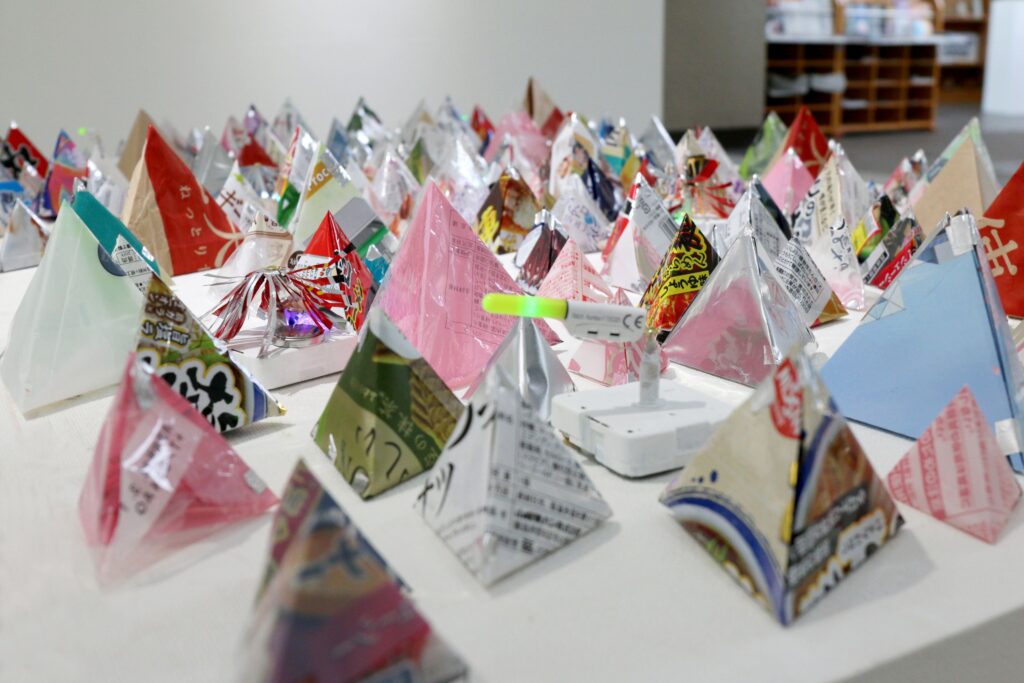
From March 2–6, I synchronized my life to the recycling center’s clock. Working from 8:45 to 17:00, I adopted their 50-minute cycles and strict 10-minute breaks, with a lunch break from 12:00 to 13:00. I used their rhythm as a formal constraint to “recycle” my own daily waste: sorting, handling, and transforming the packaging waste of my stay in Tenjinyama into sculptural objects with repeated shapes. In this process, time became a structure, repetition a method, and fatigue a form of reflection.
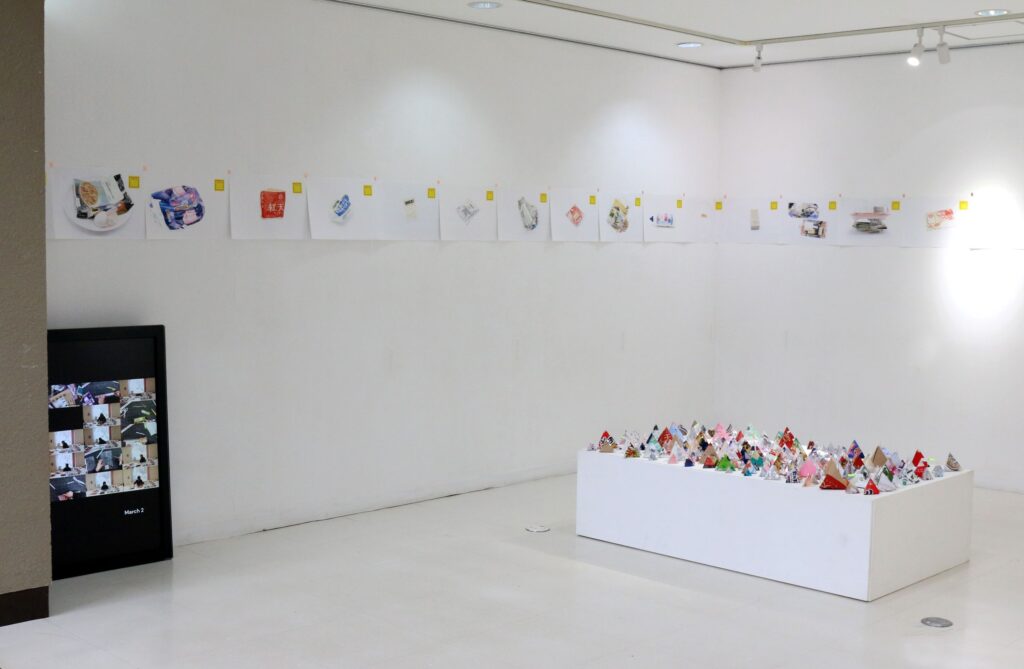
This exhibition brings together the objects produced, video documentation of the cycles, and an archive of my waste. Here, “waste” is revealed as more than a material endpoint; it is a temporal and infrastructural condition.
Our systems of consumption privilege the immediate and the seamless, yet the processing of that consumption relies on slow, invisible, and disciplined labor. While dominant narratives of the future promise efficiency and “bright” progress, the reality of the hands sustaining that future remains prolonged and obscured. By making these hidden temporalities visible, this work asks: can we truly call it “progress” when the labor that sustains it is designed to be forgotten?
Back to the Future #3: 明日はもっと果てしない / 明天更漫长
駒岡リサイクルセンターの労働者たちに捧ぐ
数週間前、私は駒岡リサイクルセンターで「必然性が生んだ振付(コレオグラフィー)」を目の当たりにしました。そこにあったのは、冷徹で反復的なリズム、厳格に管理された時間、そして人間の身体に課された機械的な規律でした。本展は、その「重み」に対するひとつの応答です。
3月2日から6日にかけて、私は自らの生活をリサイクルセンターの時計に同期させました。8時45分から17時まで働き、センターと同様の50分間の作業サイクルと厳格な10分間の休憩、そして12時から13時までの昼食休憩を取り入れました。このリズムを形式的な制約とし、天神山での滞在中に生じた梱包資材などのゴミを自ら「リサイクル」したのです。素材を選別し、手に取り、反復的な形態を持つ彫刻的オブジェクトへと変容させていく。そのプロセスにおいて、時間は「構造」となり、反復は「手法」となり、そして疲労は「思索」のかたちとなりました。
本展では、制作されたオブジェクト、一連のサイクルの映像記録、そして私のゴミのアーカイブを展示します。ここで「ゴミ(waste)」は、単なる物質的な終着点ではありません。それは、廃棄のシステム、規律化されたルーティン、そして反復するリズムの中で働く身体によって形作られる、時間的かつインフラ的なひとつの「状況」として提示されます。
現代の消費システムは即時性とシームレスさを優先しますが、その背後にある廃棄物の処理は、遅く、不可視で、規律化された労働に依存しています。未来に関する支配的な物語が効率や「輝かしい進歩」を約束する一方で、その未来を支える「手」の現実は、果てしなく引き延ばされ、覆い隠されたままです。本作は、こうした隠された時間性を可視化することで、ひとつの問いを投げかけます。それを支える労働が忘却されるよう設計されているとき、私たちは果たしてそれを「進歩」と呼べるのでしょうか。